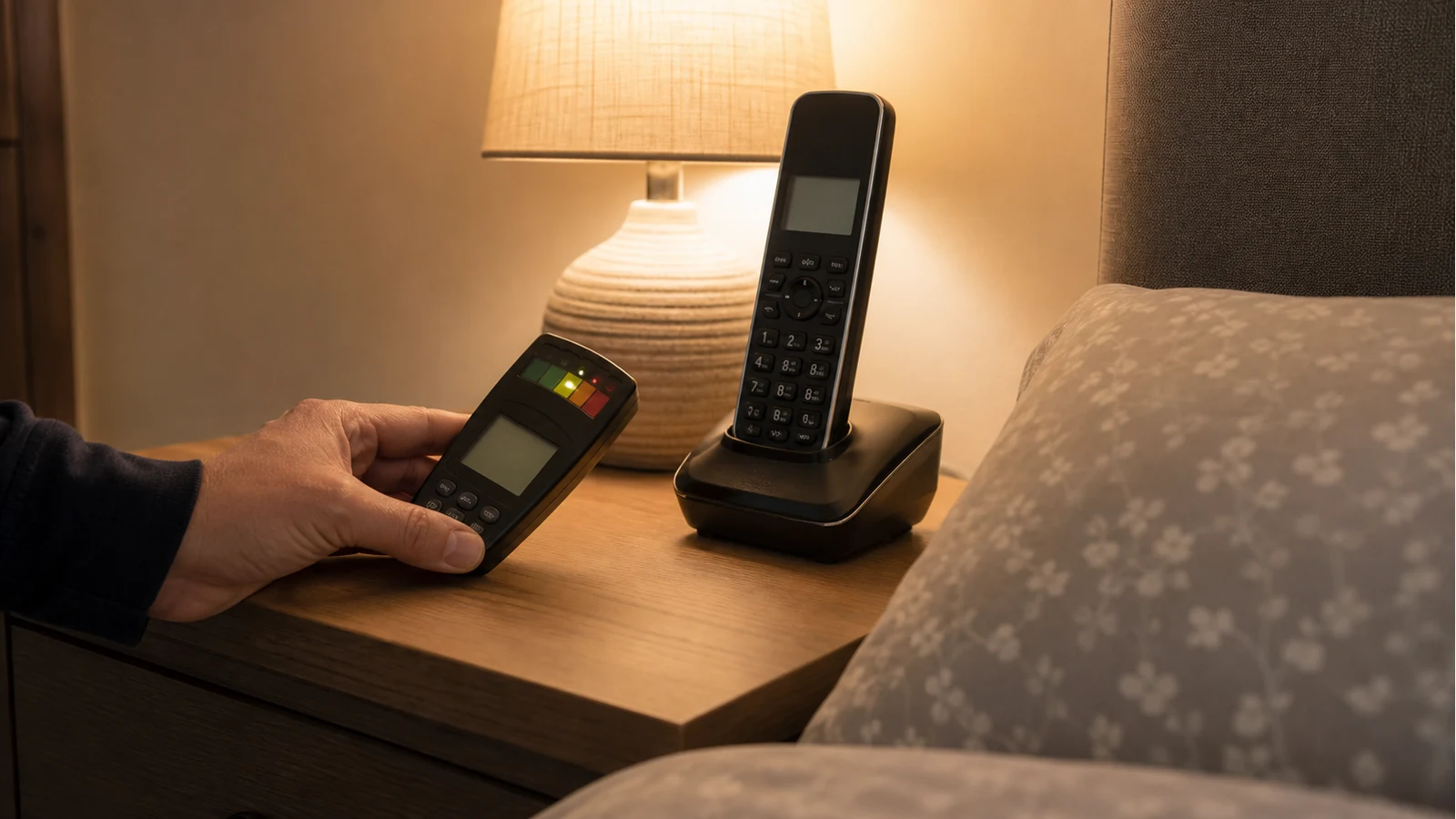
Dect Cordless Phone Base Bedroom Rf Uk
Direct answer: Check RF at the pillow with the base powered, then at 1 m and outside the room, and finally with the base briefly unplugged. If the pillow reading falls only when the base is unplugged or moved, you have a practical keep, move or unplug decision.
Separate the DECT base from the rest of the room
Turn off phone hotspots and pause avoidable wireless gadgets for the check. Leave the router alone at first, because you want to know whether the bedside base is a clear local source before rearranging the whole network.
UKHSA lists mobile and cordless phones, Wi-Fi devices and microwave ovens among common radio-wave sources. That means a DECT base should be tested as one source in a shared RF environment, not treated as the only possible cause of a reading.
The keep, move, unplug sequence
- With the base powered as normal, hold the meter at the pillow position facing the bedside table.
- Repeat at 1 m from the base, then just outside the bedroom door.
- Briefly unplug the base, wait for the handset to show it has lost connection, and repeat the pillow point.
- Move the base to a hallway socket for a temporary test and check the pillow again.
- Make one change for two nights: keep, move, or unplug at night if calls are not needed.
What not to conclude
This checklist cannot diagnose electromagnetic sensitivity, explain headaches or prove that a smart meter is involved. UKHSA reports smart-meter radio-wave exposure as well below ICNIRP guidelines, but that does not stop a reader from preferring to move an always-on bedside transmitter away from the pillow.
When equipment is relevant
If you cannot tell whether the base, router or another wireless device is the active source, a 3-in-1 handheld meter may help with repeatable RF spot checks. Review the RDINSCOS product page only after the free unplug-and-move test shows you need measurements.