EMF Detectors in the UK: What They Measure and How to Choose
A calm UK guide to EMF detectors: RF, electric and magnetic modes, measurement limits, repeatable home checks and when to use a professional.
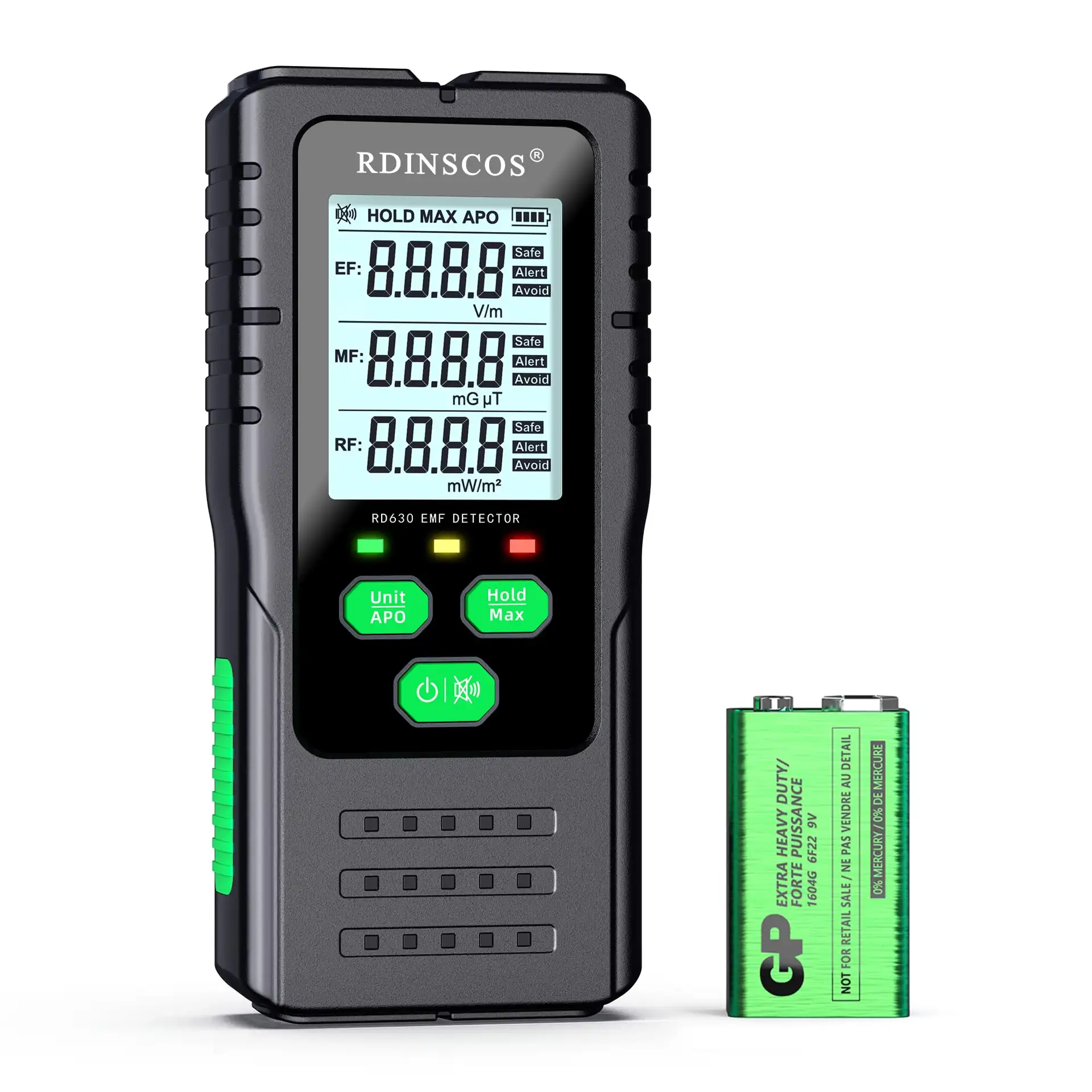
An EMF detector can be useful for finding and comparing electrical, magnetic or radio-frequency sources, but only when its sensing modes match the question. It is a screening instrument, not a medical device, a spectrum analyser or an automatic verdict on whether a room is safe.
For most UK home users, a three-mode meter is the practical starting point because the same box can compare low-frequency magnetic fields, electric fields and radio-frequency signals. The important work happens after purchase: selecting the right mode, controlling distance and device state, and keeping a repeatable log.
What does an EMF detector measure?
“EMF” is an umbrella term. Consumer meters may cover one or more distinct measurements:
| Mode | Typical unit | Useful for screening | What it cannot tell you alone |
|---|---|---|---|
| Magnetic field | microtesla or milligauss | Wiring loads, motors, transformers and some appliances | Which individual circuit caused a reading without further checks |
| Electric field | volts per metre | Energised cables and appliances | Current flow or RF activity |
| Radio frequency | power-density or field-strength units | Routers, phones, monitors and radio transmitters within the stated band | The exact transmitter or frequency without spectrum analysis |
Do not compare numbers from different modes as if they share one scale. A meter that shows RF and magnetic results on the same display is still making different measurements.
Choose the meter by the job
Start with a one-sentence question. “I want to compare the smart-meter wall at the bed head and one metre away” is testable. “I want to find all harmful radiation” is not.
For smart meters, routers and baby monitors
You normally need an RF mode whose published frequency range includes the source of interest. Keep your own phone in a known state because it can dominate a nearby reading. For a smart-meter-specific sequence, use the party-wall smart-meter checklist.
For wiring, fuse boards and appliances
Magnetic and electric modes are more relevant. Loads change with appliance state, so record what is on and off. Do not open electrical equipment or remove covers to obtain a reading. Suspected wiring faults belong with a qualified electrician.
For a general room survey
A three-mode unit reduces the risk of using the wrong detector for the source. The RDINSCOS product page describes the current meter sold on this site; confirm its live range, box contents, price and returns terms before ordering.
Specifications that matter
- Modes and frequency range. Confirm them in the manual for the exact revision.
- Units. The display should make the active unit unambiguous.
- Resolution versus accuracy. Extra decimal places do not prove accuracy.
- Calibration statement. A consumer accuracy claim is not an accredited calibration certificate.
- Response behaviour. Fast alarms can help locate a source but make a single peak easy to overvalue.
- Data logging. Manual notes can be enough; exporting data helps longer surveys.
- Power and controls. Backlight, hold and sound controls matter in practical use.
- Support and returns. These matter when a range or mode does not match the intended source.
A repeatable home measurement method
Use the same process each time:
- Draw a simple room plan and label fixed points.
- Record date, time, meter mode and unit.
- Put phones, wearables and radios into a known state.
- Hold the meter in the orientation described by its manual.
- Measure at fixed distances, for example near the source, 30 cm away and one metre away.
- Wait the same amount of time at each point.
- Repeat each reading three times.
- Change one variable only, such as router position or appliance state.
- Record the change without converting it into a health claim.
The home EMF meter guide expands this workflow, while the best EMF meter UK guide helps compare instrument scope.
How to interpret a spike
A high or rapidly changing display is a reason to check the setup, not a diagnosis. Move your phone away, check the selected mode, repeat at fixed distances and identify which device state changes the result. A reading that falls predictably with distance is more informative than one isolated screenshot.
Public guidance and exposure limits require context about frequency, duration, averaging and instrument suitability. A general-purpose meter cannot turn one momentary value into a compliance report. The UK Health and Safety Executive’s non-ionising radiation material is useful context for workplaces; formal assessment should use competent people and suitable calibrated equipment.
Smart-meter questions without health alarmism
The old version of this page focused almost entirely on smart meters. That is a valid use case, but it is only one part of choosing an EMF detector.
UK government information on smart-meter radio waves should be read before attributing symptoms or danger to a handheld reading. Use a meter to compare location, distance and operating state. Do not use it to diagnose headaches, sleep problems or any illness. If symptoms are involved, keep the measurement log separate from healthcare decisions and seek appropriate medical advice.
Common mistakes
- Measuring RF while holding an active phone beside the meter.
- Using magnetic mode to judge a Wi-Fi source.
- Comparing different units as if they were interchangeable.
- Treating the alarm threshold as a universal legal limit.
- Moving both the source and meter between readings.
- Buying shields or pendants before establishing a repeatable baseline.
- Claiming that a meter identifies a cause of symptoms.
- Presenting consumer screening as accredited compliance evidence.
When to call a professional
Use an electrician for suspected electrical faults, damaged wiring or unsafe equipment. Use a competent occupational or RF specialist when a workplace, planning dispute or formal report requires calibrated instruments and documented methods. Seek medical advice for symptoms; an EMF meter is not a diagnostic route.
Frequently asked questions
What is the best EMF detector for home use in the UK?
The best fit is the meter whose modes cover your known sources and whose units, range and limitations you can understand. A three-mode unit is versatile, but it is not automatically more accurate.
Can an EMF detector test a smart meter?
It can compare RF or magnetic readings if the meter’s stated range covers the source and the method controls distance and other transmitters. It cannot diagnose illness or replace a formal survey.
Can a phone app replace a meter?
A phone contains useful sensors, but it does not automatically provide the same calibrated modes or RF coverage as a dedicated instrument. Check what the app is actually reading before relying on it.
Does a low reading prove there is no EMF?
No. It may mean the selected mode or frequency range does not cover the source, the source is inactive, or the signal is below the instrument’s response. State the limits with the result.
Bottom line
Buy an EMF detector to answer a defined measurement question. Match the mode to the source, log fixed points, repeat the test, and keep health and compliance conclusions outside the instrument’s evidence. That method is more useful than chasing the loudest alarm or the largest number on a product page.