Room By Room Meter Notes For House Viewing Uk
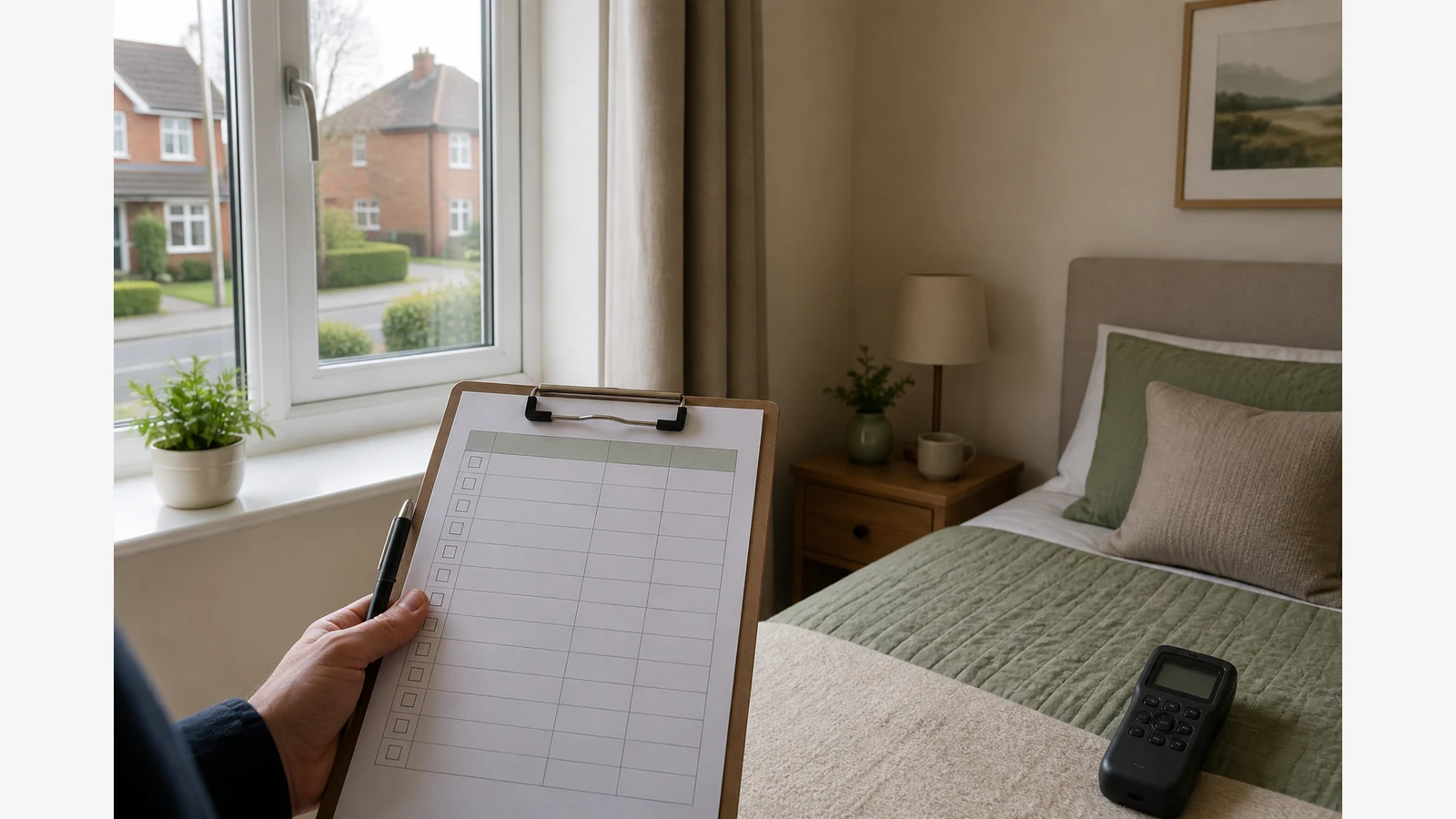
On a GB second viewing, capture magnetic-field notes in the main bedroom, child room, lounge and garden edge in one pass. Offer windows are short; a paid EMF survey often cannot be booked in time. Stand still 10–20 seconds per spot, jot distance to any visible lines or substations, then revisit only rooms that stay elevated after you step 1–2 metres aside.
UKHSA describes how fields near large power lines are higher and fall with distance. Network operator guidance for living near electrical equipment also gives useful proximity context: UK Power Networks notes substation boundary fields often about 1–2 µT and dropping within a metre or two. Those figures explain why a step-back recheck matters—they are not a verdict on whether you should buy.
What DIY notes can and cannot do
- Can: give you comparable room-level magnetic notes before an offer deadline.
- Cannot: replace solicitor searches, structural surveys, or a professional EMF survey if a dispute needs formal evidence.
- Must not: turn a single spike into a medical conclusion about the property or its future residents.
Room-by-room viewing checklist
- Main bedroom — Bed position and window wall facing any visible overhead line or street cabinet.
- Child room / second bedroom — Cot or bed centre, then 1–2 m toward the shared wall if a neighbour substation or meter cupboard is suspected.
- Lounge — Seating height away from the TV stack; optional second note by the consumer unit cupboard from outside the open door.
- Garden edge — Boundary closest to pylons, overhead spans or a ground-mounted substation, then a step inland toward the house.
Note sheet you can photograph on site
| Room | Spot | Seconds still | µT | Distance cue | After 1–2 m step |
|---|---|---|---|---|---|
| Bedroom 1 | Bed centre | 10–20 | |||
| Bedroom 2 | Bed / cot | 10–20 | |||
| Lounge | Sofa | 10–20 | |||
| Garden | Boundary | 10–20 |
Decision path during a short viewing
- If a garden-edge note is clearly higher than indoor centres and falls after a short step toward the house, you are mainly mapping distance decay.
- If an indoor room stays high after stepping away from sockets and white goods, mark it for a slower revisit or professional advice.
- Keep magnetic mode for line and substation questions; switch to RF only if your concern is a nearby mast or dense Wi‑Fi—and log modes separately.
After the viewing
Compare magnetic notes with published home-background context using the guide to UKHSA background ranges. If a new mobile mast is the family worry rather than a pylon, read the Ofcom mast audit versus handheld comparison before treating indoor RF notes as compliance evidence.
When the offer clock is ticking and you need a portable magnetic/RF meter for the next viewing, the product detail page covers the handheld option—without replacing legal due diligence.
FAQ
Is a consumer meter enough to decide on a pylon-side purchase?
It can inform a family discussion with room-level notes. It does not replace professional survey evidence if you need formal documentation.
What if the display pegs or jumps wildly outdoors?
Step back, wait for a settled reading, and note weather and nearby traffic cabinets. Unstable digits are a reason to revisit, not to invent a story about the house.