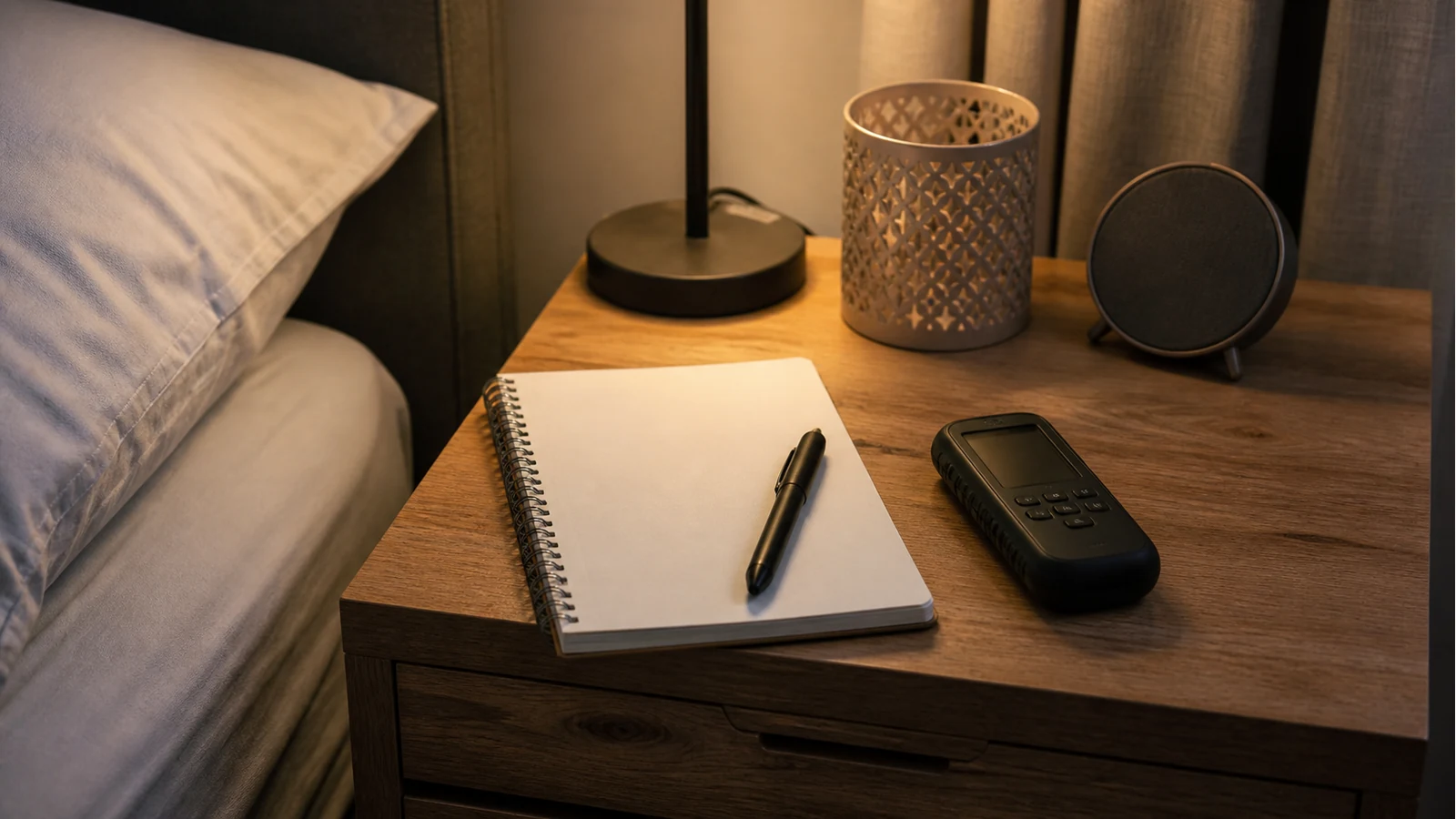
Seven Night Bedroom Emf Log Uk
Direct answer: Use the same pillow spot, same time window and clear device-state notes for seven nights. The log is a decision aid for moving chargers, displays, mesh nodes or the bed; it is not a medical diary and cannot prove a smart meter caused symptoms.
Set the rules once
Pick one pillow-height point and one backup point near the door. Use the same meter orientation each night. Record mode, time, device states and action taken. Avoid changing three things at once, because you will not know which change mattered.
UKHSA describes typical UK home magnetic background levels and explains that higher domestic readings often occur close to appliances and wiring. That is why the log includes chargers, displays and room layout rather than focusing only on the meter cupboard.
The seven-night template
| Night | Task | Write down |
|---|---|---|
| 1 | Baseline | Normal room, no changes. |
| 2 | Repeat baseline | Same spot, same time, check variation. |
| 3 | Move phone and charger | Pillow result before and after moving them. |
| 4 | Check in-home display | Bedside, hallway, then off if practical. |
| 5 | Move mesh or router node | Pillow, 0.5 m, doorway. |
| 6 | Confirm lowest layout | Repeat the best setup. |
| 7 | Final check | Decide what stays moved. |
Stop conditions
Stop the self-test route if you need medical advice, if a reading is being used in a legal or landlord dispute, if you suspect faulty wiring, or if symptoms persist. A qualified electrician, GP, installer or surveyor is the correct route for those cases.
Where a meter fits
If the log shows that you need to compare magnetic, electric and RF modes at the same points, a handheld meter may be useful. The RDINSCOS product page is relevant only under that condition; otherwise a notebook and no-cost changes may be enough.