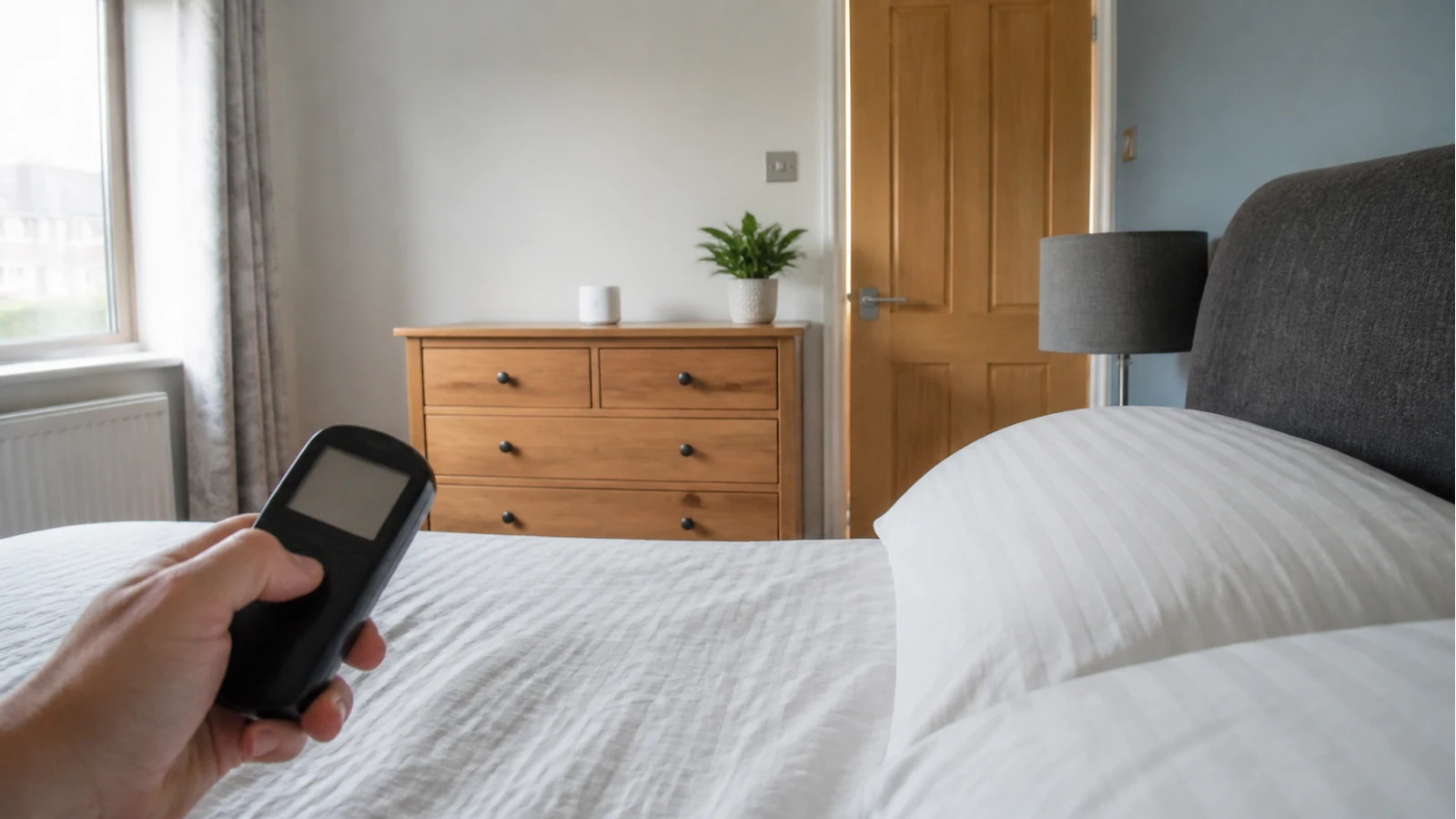
Wifi Mesh Node Pillow Distance Uk
Direct answer: Check RF at the pillow with the nearest mesh node in its normal position, then move that node to a hallway or shelf outside the sleep zone and repeat the same points. If the bedroom still has usable Wi-Fi and the pillow reading is lower, the placement decision is straightforward.
Make the test fair
Do not start by turning off the whole network. First identify the nearest node, note its normal shelf or bedside position, and turn off your phone hotspot so the phone is not the extra transmitter in your hand.
UKHSA includes Wi-Fi devices among common radio-wave sources. The sensible home question is therefore placement and distance, not whether a mesh kit is uniquely dangerous.
Pillow, half metre, doorway
- Measure RF at the pillow facing the node.
- Measure again 0.5 m away from the pillow on the side you actually sleep.
- Measure at the bedroom doorway.
- Move the node outside the sleep zone, ideally to a hallway shelf or far dresser.
- Repeat all three points and check a normal streaming or video-call task downstairs.
Decide without promising a health outcome
If moving the node lowers the pillow reading and the network still works, keep it moved. If it breaks coverage, try height and doorway placement before buying new equipment. Do not claim the change will cure poor sleep; treat it as a low-effort exposure preference and cable-management improvement.
When to consider a meter
If you are comparing a mesh node, DECT base and smart display in the same room, repeatable RF readings can save time. Under that condition, check the RDINSCOS product page; if you only need to move one node, the temporary relocation test may be enough.